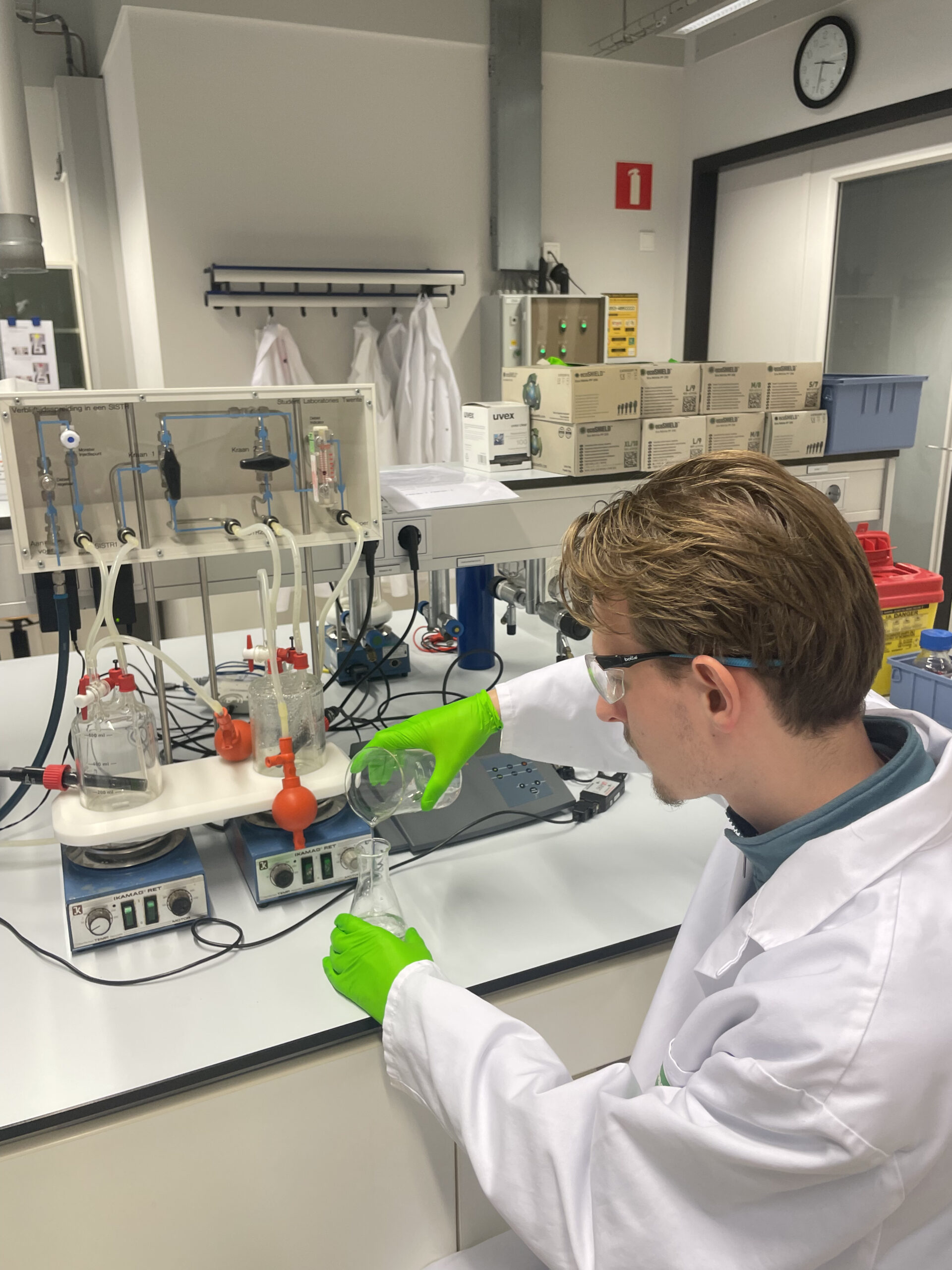
Felix Zechner did not originally plan to study in Enschede. The student born in Munich, Germany, had set his sights on Groningen. But when his application was rejected, he took a closer look at the University of Twente. “I saw the campus, and then I ended up in Enschede. And I’m really happy about that.” It has certainly worked out well: with the highest first-year marks in his programme, Felix has won the KHMW Young Talent Encouragement Award for Chemical Engineering.
Moving from Munich to Enschede meant adjusting to a quieter city, but Felix quickly felt at home at the university. He particularly appreciates the approachable lecturers and supportive staff. “If you have any problems, you can reach out to people.” The chemical engineering study association helped him find his feet socially, too. He is now chair of its sailing committee, and his free time also includes running, volleyball, football and travelling.
So how does he fit excellent grades into that schedule? His answer is reassuringly straightforward: attend lectures, do the tutorials and keep up with the work. “Consistency is a big part of it. And then, in the end, I guess it’s also a bit of talent!” Studying late into the night is not his usual approach. “I study, but it’s not like studying takes up my whole life. It’s a good balance.”
His enthusiasm for chemistry began with an inspiring teacher during his final two years at school. “He really showed how it could be applied, and he was very enthusiastic about it.” Chemical engineering offered Felix a way to turn that interest into something useful. “I wanted to do something meaningful in my life. As a chemical engineer I can hopefully contribute to solving the sustainability problems we’re facing.”
One challenge he would like to tackle is reducing carbon dioxide emissions, whether by improving industrial processes or turning captured CO₂ into useful products. He initially imagined a career in industry, where he could put ideas into practice. University has broadened his outlook: “The longer I’m here, the more I feel that research is also interesting and fundamental to it all.”
For now, he is learning both chemistry and how to work with others. Group projects have taught him to recognise his teammates’ strengths, share responsibilities and trust their contributions. “You can only solve it as a team.” Even the student with the highest marks has plenty left to learn, and Felix seems to enjoy precisely that.